
Eye Care Services
Cornea
Clear Vision Starts with a Healthy Cornea
Corneal conditions directly affect the clarity and quality of your vision. At Telescope, we provide advanced, personalized solutions to treat a wide range of corneal conditions using the latest technologies.
What is the Cornea?
The cornea is the clear, front surface of the eye. It plays a vital role in focusing light to produce clear vision.
Any change in its shape or clarity may lead to:
Blurred vision
Decreased visual acuity
Light sensitivity
Distorted vision
Corneal Conditions We Treat
Corneal Transplant
Replacement of the damaged part of the cornea with healthy donor tissue using advanced techniques tailored to each patient’s condition.
Full Thickness Transplant (PKP)
Replacement of the entire corneal thickness in advanced cases.
Anterior Layer Transplant (DALK)
Replacement of the front layers while preserving the healthy inner layers.
Endothelial Transplant (DSAEK / DMEK)
Precise techniques that replace only the inner layer, allowing for faster recovery.
Keratoprosthesis
An advanced solution for complex cases not suitable for traditional transplantation.
Corneal Cross Linking
A procedure designed to strengthen corneal tissue and halt the progression of conditions such as keratoconus.
Pterygium Removal
A surgical procedure to remove abnormal tissue growth on the eye surface that may affect vision.
Phototherapeutic Keratectomy (PTK)
A laser-based treatment used to manage corneal surface opacities and irregularities, improving clarity.
Amniotic Membrane Transplantation
A procedure that promotes healing of the ocular surface and reduces inflammation in advanced cases.
Limbal Stem Cell Transplantation
An advanced technique used to restore the corneal surface in cases of severe damage or chemical burns.
Our Technology at Telescope
We use advanced technology to ensure precision and optimal outcomes:
- State-of-the-art diagnostic tools for detailed corneal evaluation
- Globally recognized treatment techniques
- Customized treatment plans tailored to each patientu2019s needs
What to Expect After Treatment
Recovery depends on the condition and type of treatment, but generally includes:
- Gradual improvement in vision
- Close follow-up after the procedure
- A clear treatment plan to ensure the best results
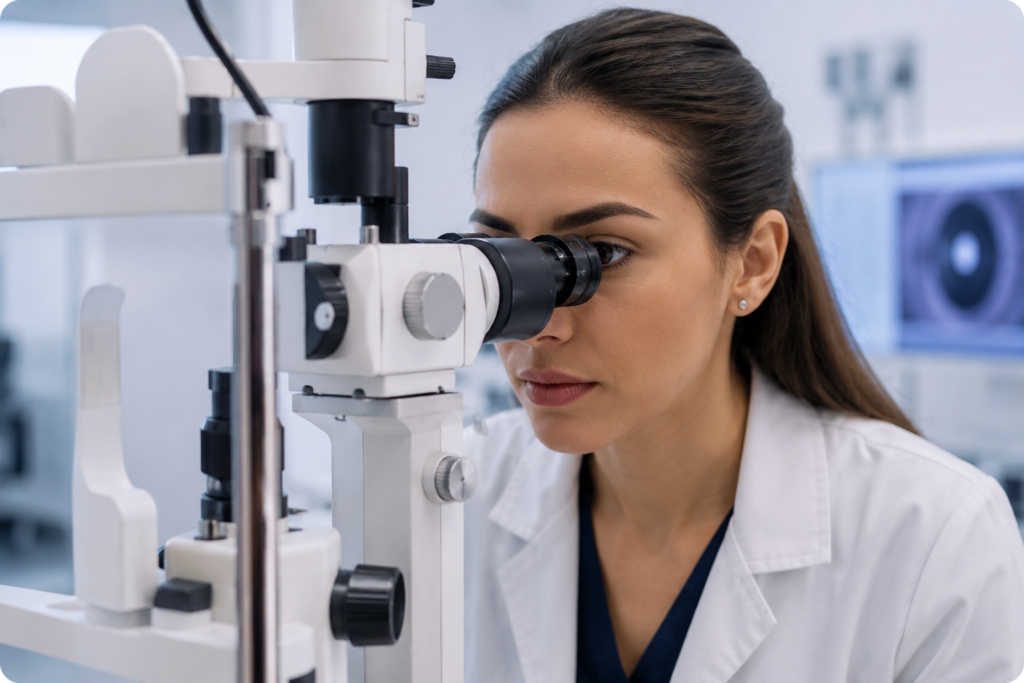
Our Technology at Telescope
We use advanced technology to ensure precision and optimal outcomes:
- State-of-the-art diagnostic tools for detailed corneal evaluation
- Globally recognized treatment techniques
- Customized treatment plans tailored to each patient’s needs
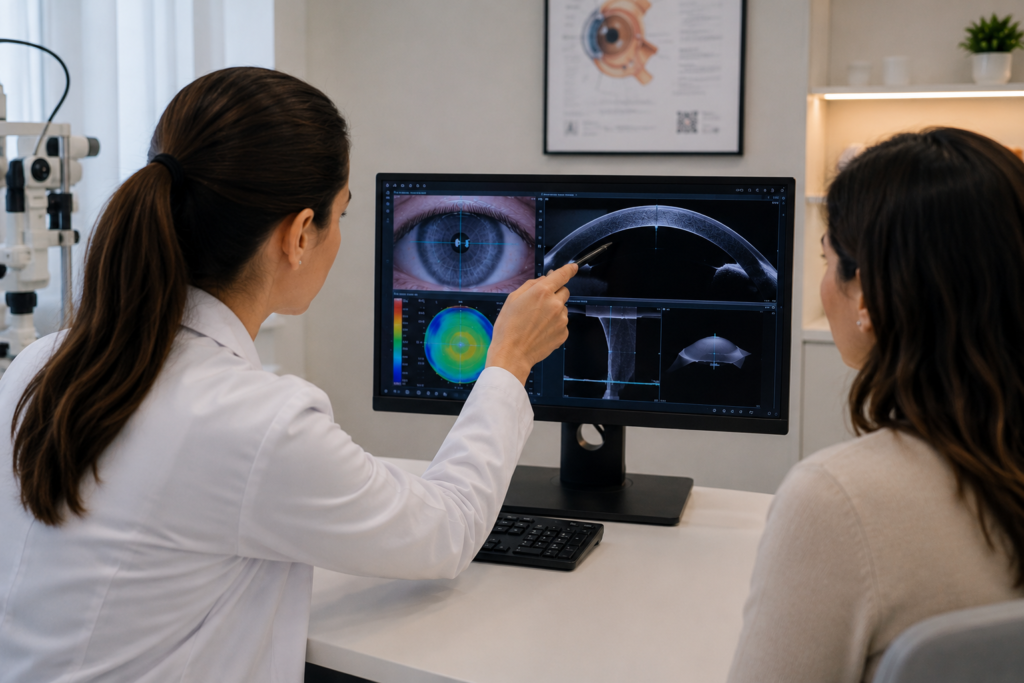
What to Expect After Treatment
Recovery depends on the condition and type of treatment, but generally includes:
- Gradual improvement in vision
- Close follow-up after the procedure
- A clear treatment plan to ensure the best results
Frequently Asked Questions
Are corneal conditions serious?
It depends on the type of condition. Some corneal problems are minor and can be treated easily, while other cases require follow-up and specialized or surgical treatment.
What is keratoconus, and can it be treated?
It is a medical condition that causes progressive weakening and thinning of the cornea, leading to blurred vision. Its progression can be halted using corneal cross-linking technology. In some cases, lens implantation, corneal rings, or corneal transplantation may be needed in advanced stages, with other treatment options available depending on the condition.
Is corneal transplant a complex procedure?
Corneal transplantation is a delicate procedure, but it is performed using advanced techniques with high success rates when appropriately indicated.
How long does recovery take after corneal treatment?
It depends on the type of treatment, but in most cases recovery is gradual over several weeks, with regular follow-up to ensure the best possible outcome.
Can the condition return after treatment?
This depends on the condition and treatment. Some conditions can be fully managed, while others may require ongoing monitoring.
Is the treatment painful?
Most procedures are performed under local anesthesia, with minimal and manageable discomfort.
When should I see a doctor?
If you experience persistent blurred vision, sudden changes in vision, or unusual sensitivity to light.
Book Your Consultation Today
Start your journey toward clearer vision with a specialized team and advanced technology.